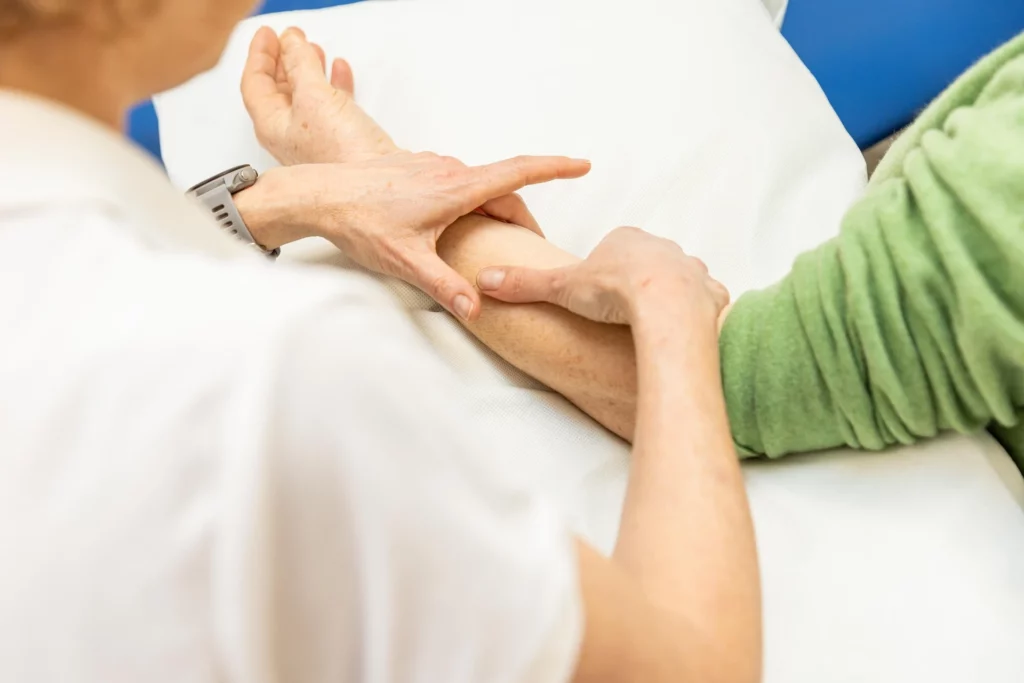
At Neurobility we specialise in the assessment and treatment of Parkinson’s disease and related movement disorders. We are delighted to be launching our new Parkinson’s Exercise Class next month, designed using the latest evidence to help people move better, feel stronger and stay independent for longer.
What Is Parkinson’s Disease?
Parkinson’s is a progressive neurological condition that affects movement. It is caused by a reduction in dopamine, a chemical messenger in the brain that helps control smooth, coordinated movement.
Common symptoms include:
- Slowness of movement (bradykinesia)
- Stiffness (rigidity)
- Tremor
- Changes in balance and walking
- Reduced arm swing
- Smaller steps
- Fatigue
- Freezing episodes
Over time, Parkinson’s can affect confidence, independence and overall quality of life.
Exercise: A Cornerstone of Parkinson’s Management
Exercise has been shown to be one of the most powerful treatments available for Parkinson’s. Alongside medication it truly helps to slow the disease process and is even thought to protect the brain from decline. Here at Neurobility, we understand the importance of exercise, but also the barriers to exercise. We work with people to help them design an exercise programme that they enjoy and that fits in with their lives. We believe that if you are living with a progressive condition it is important to be as strong and fit as you possibly can be. If the disease takes a little bit from a strong, fit body it doesn’t have the same impact as if it takes it from body that is already weak through lack of exercise.
What Kind of Exercise is needed?
People with Parkinsons need a balance of different kinds of exercise to make sure they are targeting all the correct areas to stay as strong and fit as possible. It is recommended that people have a balance of:
- Aerobic
- Strength
- Flexibility
- Balance and co-ordination
Aerobic Exercise
This is your cardiovascular training to keep your heart and lungs strong and to help with stamina and endurance. You need to aim to feel slightly out of breath, but so you can still talk. For example brisk walking, cycling, dancing, even housework or gardening can count.
Strength Training
People with Parkinson’s often experience muscle weakness and reduced power. Strength exercise is working with weights, doing body weight exercises (such as squats or lunges), or using resistance bands. It can even include standing up and sitting down a few times. We focus on big, strong, controlled movements. Movements can get smaller over time due to the effects of the disease process, so we need to make sure movements stay big by doing large amplitude movements when exercising.
Flexibility
Rigidity or stiffness is a hallmark of Parkinson’s. Without regular stretching, posture can become more stooped and movements smaller and stiffer.
Daily flexibility helps:
- Maintain upright posture
- Improve arm swing
- Reduce discomfort
- Improve breathing mechanics
People need to have targeted stretches to ensure they are keeping as flexible as possible.
Balance and Co-ordination
Difficulty with balance can lead to falls, difficulty with walking outdoors, or struggling with day to day tasks like washing and dressing. Exercise such as yoga or Tai Chi can be brilliant for balance, but it can be as simple as practicing standing on one legwhile you are waiting for the kettle to boil.
Dancing is perfect for co-ordination, or aerobics type classes, even just moving to music at home, or working on big cross body type movements where you are co-ordinating your arms and legs works just as well.
One thing that can become difficult with Parkinsons is multi-tasking. Doing activities that require thinking as well as moving such as carrying a cup of tea can be counted as multitasking and be a struggle. A good way to work on this is to do a cognitive task while walking. My favourites are naming countries for every letter of the alphabet, or counting back from 100 in sevens.
Incorporating Exercise into Everyday Life
One of the biggest barriers to exercise is feeling that it requires “extra time.”
We help people build exercise into daily routines:
- Practising big steps when walking to the kitchen
- Doing sit-to-stands during TV advert breaks
- Stretching calves while brushing teeth
- Marching on the spot while waiting for the kettle
Small, consistent habits build long-term change.
Top Tips for Managing Freezing
Freezing is a classic symptom of Parkinsons. It is when the feet feel “stuck to the floor” and initiating movement such as walking or standing up is difficult. It commonly happens in tight spaces, doorways or cluttered environments.
Here are some proven strategies we teach in clinic:
Count Down
“3…2…1… step.”
A clear start cue can help reset the movement pattern.
Tap or Shift Your Weight
Gently tap one foot or rock side to side before stepping.
Think BIG
Tell yourself: “Big step.”
Parkinson’s reduces movement size, so exaggeration helps.
Focus on the Destination
If walking through a cluttered room, look at where you want to go, not at the obstacles.
Use Visual Cues
Imagine stepping over a line on the floor. If there is a certain place where you really
struggle you could even put a piece of tape on the floor.
These techniques are simple, but incredibly effective when practised.
Why Specialist Neuro Physiotherapy Matters
Parkinson’s is complex. It affects movement, balance, posture, coordination and confidence. Management needs to be specific, progressive and individualised.
At Neurobility we:
- Provide detailed movement assessments
- Design personalised exercise programmes
- Deliver evidence-based group classes
- Support freezing management
- Address posture and balance
- Work with associated movement disorders
A Final Word
A diagnosis of Parkinson’s can feel overwhelming. But there is so much that can be done.
Exercise is not just “helpful” it is medicine.
And you don’t have to navigate it alone.
If you or someone you care about is living with Parkinson’s, we would love to support you. Our new class begins next month, and places are limited.
Please get in touch to find out more or to book an assessment for physiotherapy.