How often do we hear (or even say ourselves), “It’s just old age” when something feels harder than it used to — walking a bit slower, getting stiffer, or tiring more quickly?
As physiotherapists working with older adults, we hear this phrase all the time. But here’s the truth: while ageing is inevitable, decline is not. Our bodies do change as we grow older, but that doesn’t mean weakness, poor balance, or loss of independence are things we have to simply accept. The reality is that it’s never too late to start exercising and feel the benefits.
What Really Happens as We Age?
We all expect wrinkles and perhaps some grey hair — but what about what’s going on inside? Let’s break it down:
Muscles, Bones, and Joints
Our muscles gradually lose some of their size and strength over time (a process called sarcopenia), which can make everyday tasks feel harder. Bones also lose minerals like calcium, making them less dense and more prone to fractures. At the same time, the joints may become stiffer as cartilage thins and the natural joint “lubrication” decreases, sometimes causing discomfort or arthritis.
These changes can affect posture, balance, and walking speed — but the good news is that muscles, bones, and joints all respond brilliantly to activity at any age. Strength training helps rebuild muscle, weight-bearing exercise strengthens bones, and gentle movement and stretching keeps joints supple. With regular activity, we can protect against stiffness, stay stronger, and remain independent for longer.
Heart and Circulation
The heart is a muscle too, and like any muscle, it changes with age. It may pump a little less efficiently, and the arteries can stiffen, leading to raised blood pressure and reduced circulation. This is one reason older adults often feel colder or more easily fatigued.
Plaque can also build up in the arteries, increasing the risk of heart disease and stroke. But lifestyle plays a huge role here — and exercise is one of the most powerful protectors. Regular movement keeps the heart strong, blood vessels flexible, and circulation healthy. Even gentle activities like walking, swimming, or gardening improve energy levels, help regulate blood pressure, and lower the risk of cardiovascular problems.
The Nervous System
Our nervous system — the brain, spinal cord, and nerves — is the body’s communication network. With age, signals can slow, which affects reflexes, coordination, and sometimes memory. Sensory changes such as reduced hearing, vision, or touch can also play a part.Understandably, this can feel concerning, but here’s the encouraging news: the brain is adaptable. Thanks to something called neuroplasticity, new connections can form at any age. Physical activity supports this process by stimulating brain cells, boosting memory and focus, and improving balance. Activities that challenge both body and mind, such as dancing, tai chi, or learning new skills, are especially beneficial.
Why Staying Active Matters
A lot of the weakness, stiffness, and fatigue often blamed on “old age” actually comes from inactivity. By the age of 75, one in three men and half of women get no regular exercise. This lack of movement speeds up muscle loss, joint stiffness, and cardiovascular changes.
But here’s the hopeful part: being active — at any age — can:
- Build strength and stamina
- Improve balance and reduce falls
- Lower the risk of heart disease, stroke, and diabetes
- Keep bones stronger and reduce osteoporosis
- Ease arthritis pain and keep joints mobile
- Boost memory, focus, and overall brain health
- Reduce the risk of some cancers
- Improve mood, confidence, and independence
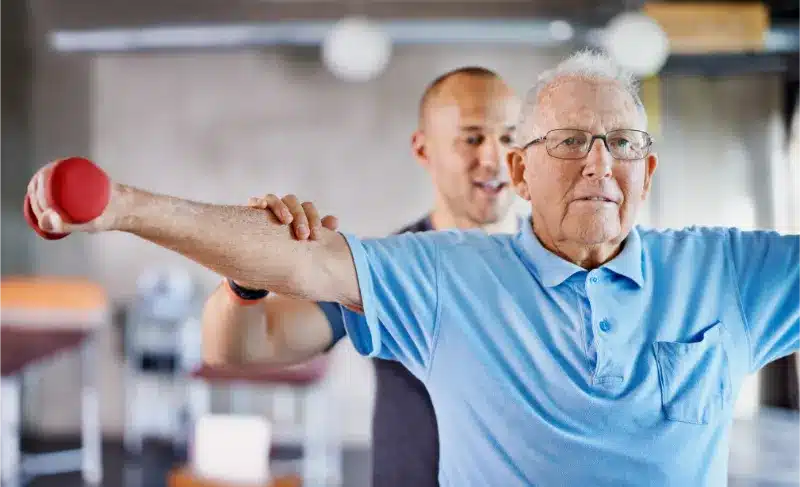
And remember, “exercise” doesn’t need to mean running marathons or lifting heavy weights. Walking with friends, gardening, swimming, chair-based exercises, or joining a local dance class all count. What matters most is consistency and enjoyment.
Overcoming Barriers
If you live are feeling the effects of aging or with a neurological condition such as Parkinson’s, or if you’ve had a stroke, the idea of exercising may feel daunting. Even without a medical condition, starting after a long break can feel overwhelming. That’s perfectly normal — and it’s why the right support makes such a difference.
At our practice, we specialise in working with older adults and people with neurological conditions. We create safe, tailored programmes that build confidence step by step. Whether it’s gentle strengthening at home, attending one of our classes, one to one physiotherapy sessions or giving you the confidence to start walking outdoors again, we help people discover just how capable they really are.
The Bottom Line
Ageing is inevitable — but decline doesn’t have to be. With the right movement, we can keep our muscles stronger, our bones healthier, our hearts fitter, and our brains sharper for longer.
So next time you hear the phrase “It’s just old age,” remember: it’s never too late to start. Every step, stretch, or swim makes a difference — and we’re here to support you on that journey.